
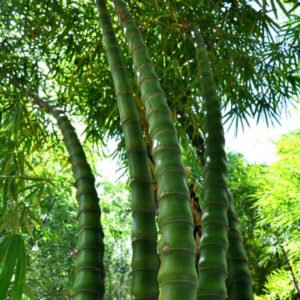
The Rise of Bamboo in Modern Times
As environmental issues such as climate change, deforestation, and pollution continue to increase, people increasingly seek sustainable alternatives today. Consequently, bamboo offers a truly promising solution. Because of its rapid growth, exceptional strength, and high versatility, bamboo has therefore become an increasingly popular material for supporting sustainable development.
Furthermore, bamboo functions as much more than just an ordinary plant. Communities and businesses actively utilize this environmentally friendly resource across construction, furniture, textiles, packaging, and various other industries. By choosing bamboo over conventional materials, businesses can successfully lower their environmental impact while building a greener future.
Bamboo as a Solution for a Sustainable Future
In everyday life, people embrace bamboo through diverse applications, spanning sustainable construction, furniture, packaging, and textiles. Builders implement bamboo for structures, flooring, and interior decoration. Furthermore, items like bamboo toothbrushes, reusable cutlery, and eco-friendly packaging actively reduce our dependence on conventional plastics.
Economic and Community Impact
Beyond environmental advantages, bamboo generates meaningful economic opportunities by creating stable jobs in agriculture, manufacturing, handicrafts, and tourism. In Indonesia—particularly in Bali—designers and engineers increasingly champion bamboo as a prime sustainable architectural material. Meanwhile, landmark projects like Green School Bali clearly demonstrate how creators harness bamboo to shape innovative, eco-conscious spaces.
Challenges in Bamboo Production
However, despite its vast potential, bamboo still encounters challenges like durability limits, high processing costs, and strict requirements for proper treatment and quality standards. Therefore, practitioners must prioritize sustainable cultivation and responsible production methods to maximize its full benefits.